Before submitting an article to an academic journal, it is important to make sure the material meets the publication's technical requirements. A missing DOI, structural errors or a high percentage of borrowed text are common reasons a manuscript is returned at the initial review stage.
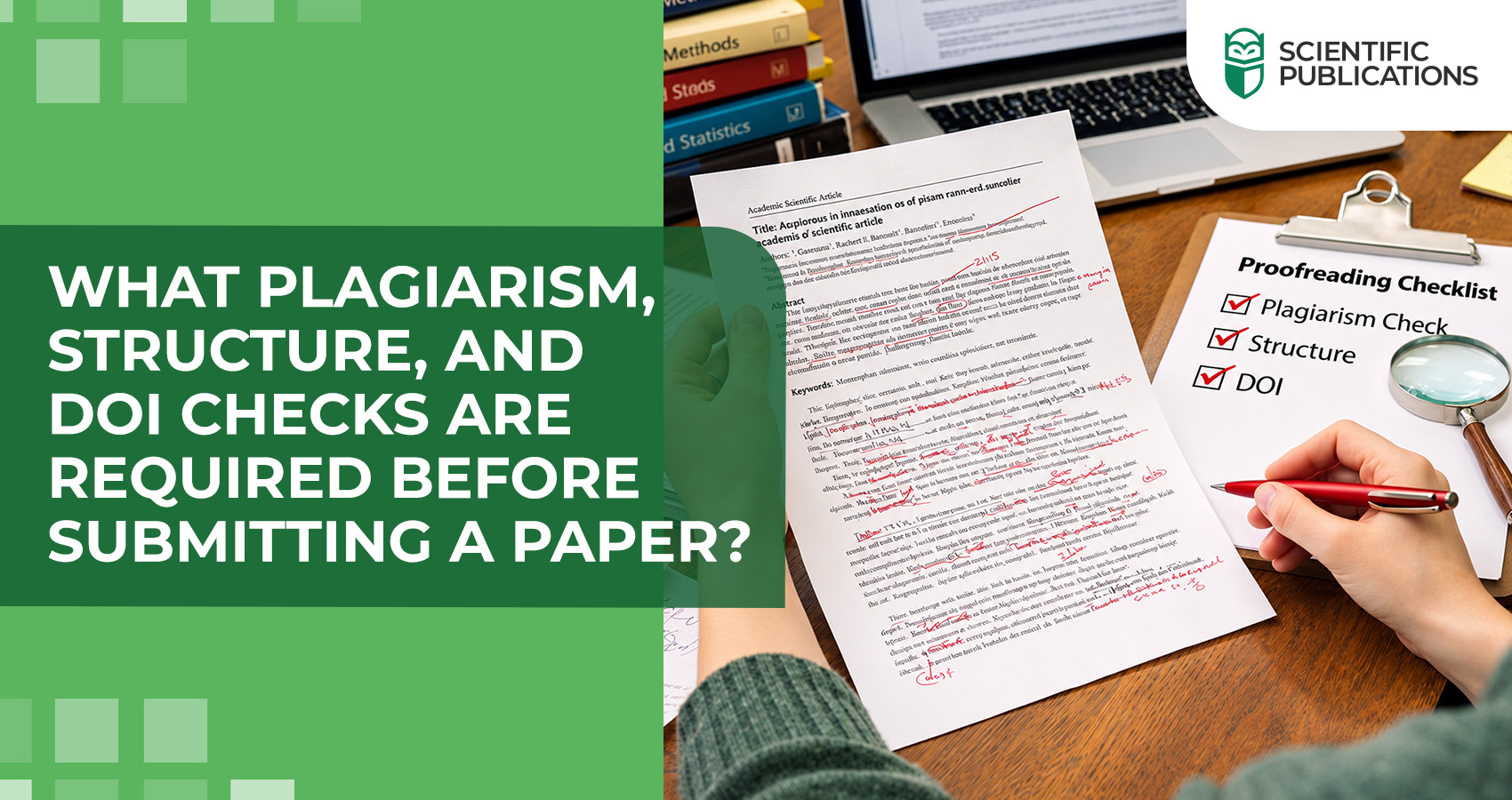
Why is an anti-plagiarism check needed before submitting an article?
Most academic journals check incoming manuscripts for text overlap before passing the material on to reviewers. Specialised systems are used for this, including Antiplagiat, Turnitin and StrikePlagiarism.
The specific acceptable percentage of text matches is set independently by each editorial board or institution, and these figures can vary considerably depending on the field and the requirements of a particular publication. It is therefore best to rely on the rules of the chosen journal rather than on averaged figures.
Self-citation deserves particular attention. Legitimate reference to one's own earlier work is not usually treated as a violation, provided it is justified by the continuation of a study or by reference to broader theoretical material.
When preparing a text for this check, it is worth paying attention to the following points:
- correct formatting of citations and references to the original source
- self-citation kept within limits accepted by the journal
- no verbatim borrowing without attribution
- in-text references matching the list of works cited
A journal's structure requirements are one of the key criteria for editors
Formal structure requirements are set by each journal individually, although a number of elements recur across most publications. Failure to follow these rules is one of the common reasons for rejection at the technical review stage.
Such requirements are usually published in the author guidelines on the journal's website and should be studied before formatting the manuscript, not after it has been written.
The following elements are usually mandatory:
- The article title and a UDC or PACS index.
- An abstract and keywords in several languages.
- Main text divided clearly into sections.
- A reference list formatted to the standard set by the journal.
The IMRAD structure (introduction, methods, results, discussion) is common for natural science and medical publications. In the humanities and social sciences, a freer structure is acceptable, provided the logic of the text is preserved and all the required sections are present.
What is a DOI and why must an article have one?
A DOI (Digital Object Identifier) is a permanent identifier assigned to an article on publication through Crossref. It contains the material's metadata: title, authors, journal, volume, issue and page numbers.
The identifier remains valid even if the journal changes its platform or the publication's website is restructured, ensuring a permanent link to the publication. Having a DOI also makes it easier to track citations and improves the article's visibility in databases.
Checking before submission reduces the risk of rejection
In Azerbaijan, the requirements for journals that qualify for a doctoral defence are set by the Higher Attestation Commission (HAC) under the President of the Republic of Azerbaijan. These are set out in a separate regulatory document and include 31 criteria, among them the mandatory assignment of a DOI by the publication and the checking of incoming articles for plagiarism.
If plagiarism is identified after publication, the editorial board receives a warning from the HAC, and repeated violations can lead to the journal being removed from the list of recommended publications.
Whether a previously published article has a DOI can be checked on the journal's website or through Crossref – this helps assess the technical reliability of a publication before submitting a manuscript.
An anti-plagiarism check, compliance of the structure with the journal's requirements and the presence of a DOI are three factors worth assessing before sending off a manuscript. This approach reduces the risk of rejection on formal grounds and saves a scientist's time.
Need help with publishing a scientific article? The specialists at Scientific Publications will help you choose the right journal and support you at every stage of the publication process. To receive a free consultation, fill in the form below and our manager will contact you shortly. Forward to new scientific achievements!