

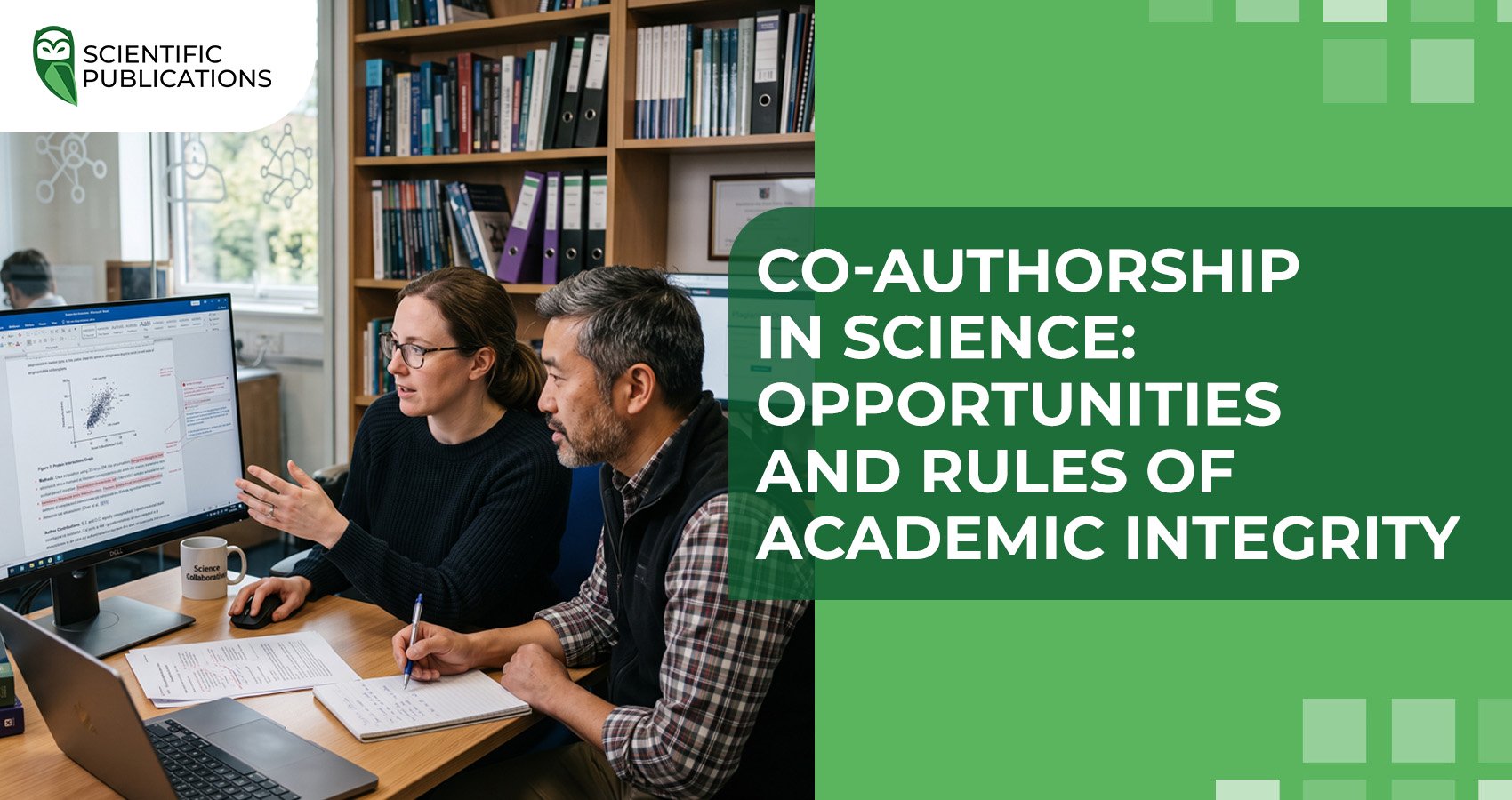
Co-authorship plays an important role in scientific activity and allows researchers to exchange experience. What opportunities does co-authorship offer, and what does a researcher need to know before beginning a collaboration? Read our article.


Scientific co-authorship without conflict: how to avoid misunderstandings?
Why does even working with trusted colleagues not always protect researchers from conflict in co-authorship? In this article, we examine the main causes of disagreements between authors, the existing standards for determining authorship, and the practical steps that can help organise collaborative work without misunderstandings.
Co-authored publication with academic supervisor: key benefits
In the academic environment, it is quite common for a postgraduate or doctoral student to publish jointly with their scientific supervisor. What are the advantages of such cooperation for all participants? Read more about it below.
Ethics of co-authored publications: how to avoid violations?
Co-authorship publication requires strict adherence to the principles of research ethics to ensure the quality of the study and avoid conflicts. How can mistakes and violations in this process be prevented? In this article, we will take a detailed look at the key aspects of ethical co-authorship.
Why international co-authorship enhances an author's scientific reputation
In the modern world of science, international co-authorship is becoming an increasingly common practice. Today we will talk about how such cooperation can help a scientist enhance their reputation.

How to correctly document each co-author's contribution to an article (Author Contribution Statement)
Why is it important to acknowledge the contribution of each researcher when writing a co-authored article? What is the purpose of an Author Contribution Statement? What does it include? Read about this in our article.
Order a publication
Contact the manager
Submit application
X

We have a gift for you!
Free citation of your research or a discount on publication services — the choice is yours!
Dmytro Pryimak
Director of the Scientific
Publications Azerbaijan company