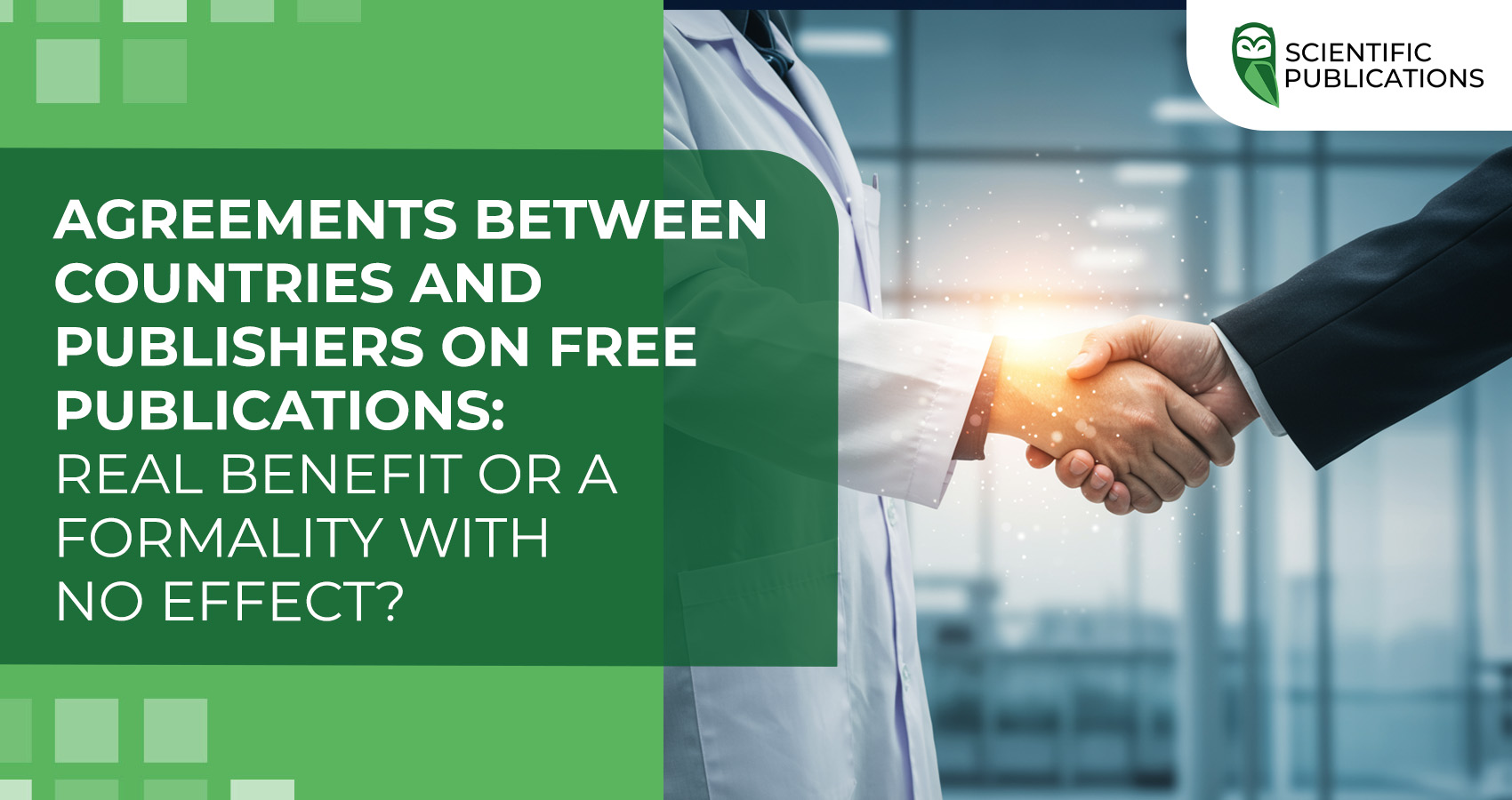
In some countries, there is a practice of concluding agreements with major scientific publishers that allow researchers to publish their articles free of charge. Such initiatives are aimed at eliminating financial barriers and promoting the integration of scientists into the international academic community. But how effective are these measures in practice? In this article, we will analyze how this system works, what opportunities it provides, and what limitations researchers may face.
Free publications: what does this practice include?
In the scientific community, there is a practice known as the “Read & Publish Agreement.” This is a special contract concluded between publishers of scientific journals and universities, research institutes, or national consortia representing the interests of researchers.
Such agreements allow researchers to publish articles free of charge in high-ranking journals indexed in databases such as Web of Science and Scopus. This exempts scientists from the need to pay publication fees, which can be quite substantial, and provides access to prestigious journals. Moreover, such initiatives often include the possibility for academic and educational institutions to use the materials from these journals for free, which ultimately contributes to improving the quality of research.
At first glance, this initiative seems promising, as it allows researchers to avoid paying publication fees, thereby saving thousands of manats and freely promoting the results of their research. In addition, publication in prestigious journals increases the author’s authority and enhances their influence within the international scientific community.
However, does this opportunity really work in practice, or is it just an attractive idea with serious limitations? Let’s find out.
Limitations of agreements with publishers
It is important to understand that the absence of publication fees does not guarantee the automatic acceptance of an article by a journal. The agreement provides financial support but does not lower the high academic standards of the publishers. Therefore, this initiative has a number of practical limitations, which we will discuss below.
Quality and compliance with requirements
Journals participating in such agreements are usually world-class publications with high standards. All articles undergo a rigorous peer-review process, where special attention is paid to scientific novelty, methodology, structure, and the quality of academic language.
For researchers, especially those who are just beginning their publication journey, meeting these requirements can be a serious challenge. It is not uncommon for their article to be sent back for revision or even rejected. Because of this, there is a risk of spending 2–3 years on publication and missing valuable opportunities for professional growth (for example, defending a dissertation or applying for a grant).
Publishers’ interests and quotas
Publishers strive to maintain the high academic level of their journals in order to preserve prestige and reputation. A significant influx of articles from a single country can create a risk of quality decline; therefore, they will more closely control the selection process.
In such agreements, there are often informal quotas or enhanced filtering, which may lead to the rejection of some articles at early stages. What does this mean? It is possible that the publisher may regulate the volume of publications in order to maintain the high standards of its journals. As a result, out of, for example, 100 submitted articles, only one may be published.
Is this practice an easy path to publication?
Agreements that allow researchers to publish for free are an important step toward removing financial barriers and supporting scientists. However, their implementation comes with a number of limitations. High academic standards, editorial quotas, and complex submission procedures create significant challenges. For many researchers, especially beginners, going through these stages can be difficult.
This practice opens up prospects only for those scientists who already meet international standards or are ready to significantly improve their research. For most, however, it remains more of an ambitious goal than a simple solution for publication.
To overcome these challenges and successfully publish an article, our company Scientific Publications offers professional support. If you are planning to publish in 2026 or the first half of 2027, we will provide guidance at all stages – from article audit to indexation in the database.
Due to our many years of experience, we guarantee adherence to deadlines and minimization of stress throughout the process. Cooperation with us eliminates the risk of unnecessary expenses while ensuring the achievement of your goal. Do not postpone your publication – contact us now. This allows you to avoid additional costs for urgent processing at the end of 2026. To learn more about our service, fill out the form below, and our manager will provide you with a free consultation. Together to the new scientific achievements!