


For many scholars, their first joint publication seems like a convenient and effective approach to writing a publication. Co-authorship can indeed help to produce strong research and speed up the working process. But in practice, the success of such work depends not only on the level of scientific preparation, but also on how correctly the co-author is chosen. A mistake at this stage can lead to conflicts over contribution, delays in submitting the article, and even reputational risks.
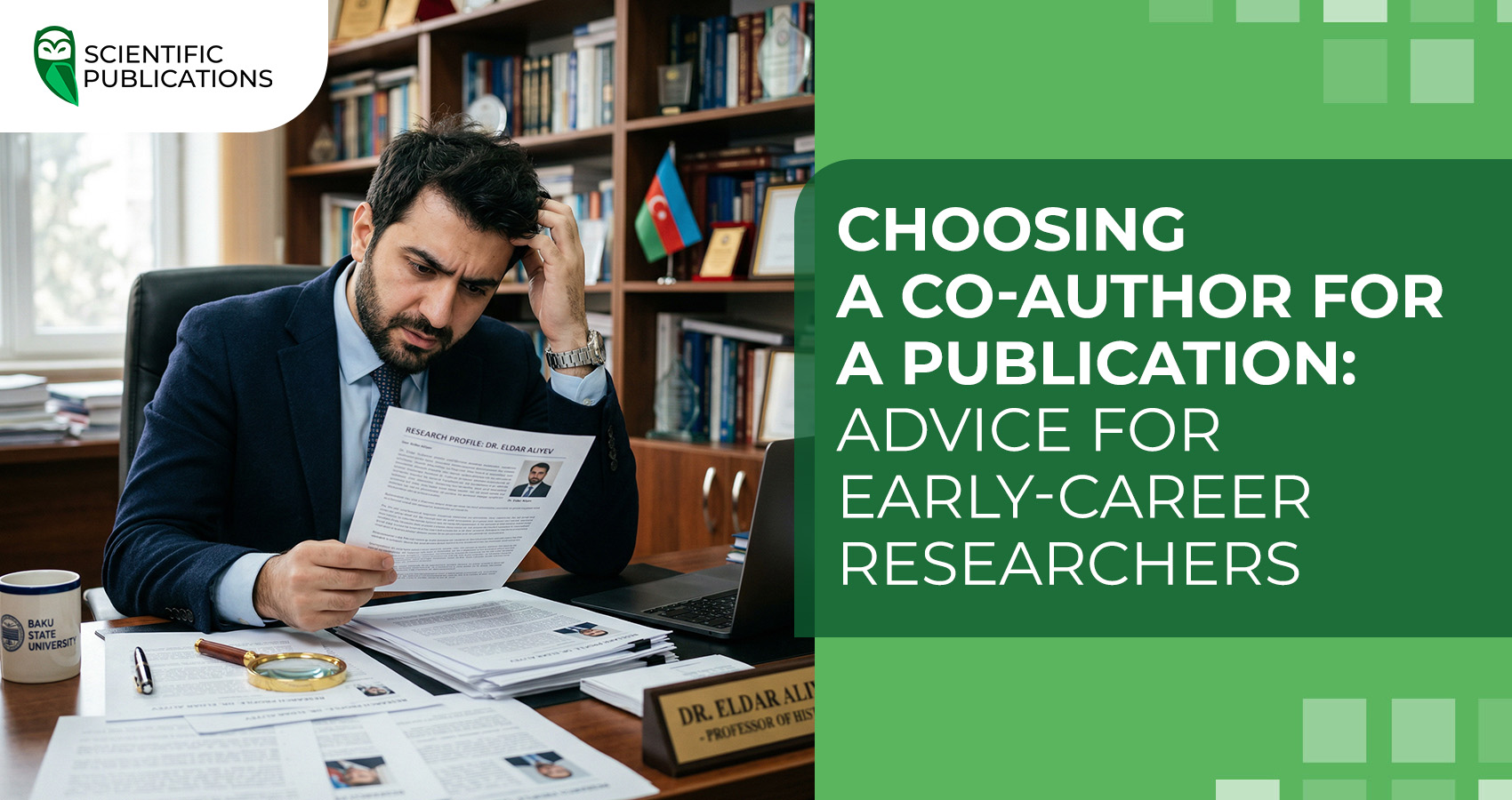
What should you look at when choosing a co-author for publication?
When choosing a co-author, it is important to assess not only the person’s position, academic degree, academic title, or reputation. It is far more important to understand whether they are genuinely suitable for your topic and whether they are ready to participate in the preparation of the article in practice. This is because a good co-author is not simply an authoritative specialist, but a person with whom you will need to establish collaborative work.
Criteria for choosing a co-author for a scientific publication
- Alignment of scientific interests and subject area.
- Publication experience in a similar field.
- Willingness to work on the text in a substantive way.
- Observance of deadlines and agreements.
- Understanding of publication ethics standards.
Mistakes when choosing a co-author for a scientific article
Early-career researchers often make the mistake of focusing only on a well-known name. However, high academic status in itself does not mean that the person will read the manuscript, help with revisions, and participate in improving the article. Formal co-authorship may seem useful, but in practice it often creates additional difficulties and even raises questions about the actual contribution of the authors.
What should be discussed with a co-author before starting work on the article?
Before beginning collaborative work, it is important to agree in advance on the key points:
- Define the topic of the article.
- Distribute the tasks.
- Agree on the order of authors.
- Decide who will handle correspondence with the journal.
- Discuss who is responsible for revising the text after reviewers’ comments.
- It is precisely the absence of such agreements that most often becomes the cause of conflicts.
Which criteria should be avoided when choosing a co-author?
Situations that should be treated with caution include those in which a potential co-author:
- avoids specifics
- cannot explain their contribution
- does not respond on time
- immediately demands authorship without discussion
A separate risk arises when a person suggests including other authors in the article who did not in fact participate in the research. For any scholar, this is dangerous, since it may harm both the quality of the publication and academic reputation.
How to build effective co-authorship in a scientific publication?
Good co-authorship is built on respect for each other’s contribution and a clear distribution of responsibility. If each participant understands their role and fulfils their tasks, then collaborative work helps to make the article stronger. In that case, co-authorship truly becomes a tool for improving the quality of a scientific publication.
Choosing a co-author requires no less attention than choosing a journal for publication. For an early-career researcher, it is important to assess not only the person’s academic status, but also their reliability, involvement, and readiness for honest collaborative work. The more clearly the rules of cooperation are defined in advance, the higher the probability that co-authorship will lead to a strong and high-quality article.
Are you planning to prepare a publication? Or do you want to understand how to choose a co-author, distribute contributions, and avoid typical mistakes? You can обратиться to Scientific Publications. We will help you build a competent strategy and will support you at all stages of the publication process. To receive a free consultation, fill in the form below, and our manager will contact you shortly. Forward to new academic achievements!


