Creating a scientific publication is a complex process that requires considerable effort, from preparing materials to checking for uniqueness and meeting deadlines. Scientists put a lot of effort and time into writing scientific papers. However, there are online tools and platforms that can reduce the workload. Proper planning in conjunction with these services greatly simplifies the organisation of research work.
What is a publication plan?
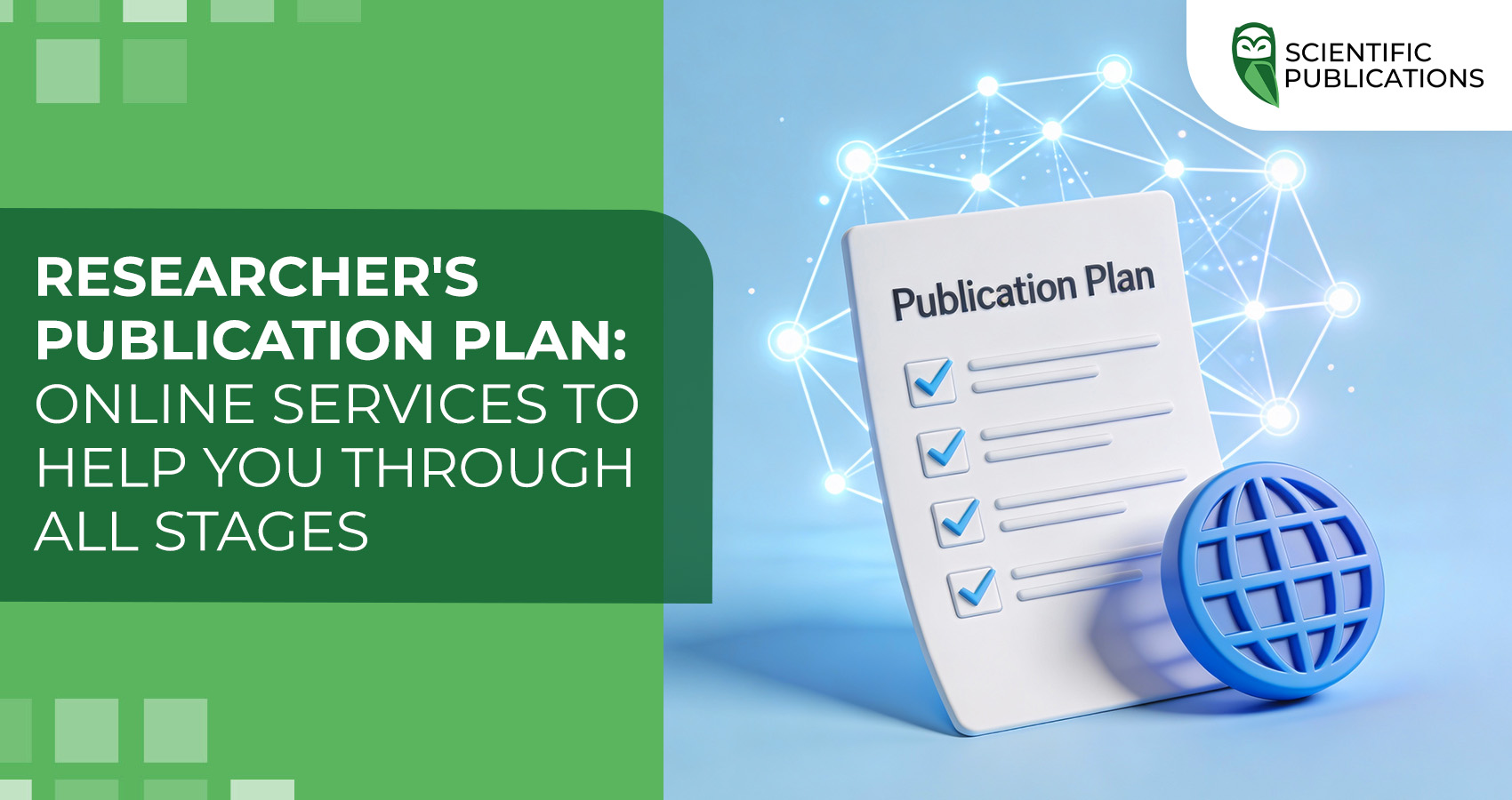
A publication plan is a tool that helps optimize the process of preparing, writing, and publishing scientific articles. It includes a list of planned publications, their topics, target journals, work stages, and deadlines.
The plan can cover short-term goals (e.g., publishing one article per year) or long-term goals, such as completing grant tasks, defending a dissertation, or advancing your career.
The main formats of a publication plan are:
- Tabular. This presents the publication plan in the form of a table.
- Calendar. This format is designed to manage deadlines and tasks.
- Diagram. Used to visualise the sequence of research work. It shows the degree of completion and the overall picture of the publication.
- Combined plan. One of the most convenient formats, as it combines several other formats and, accordingly, covers different needs in publishing activities.
Why do you need a publication plan?
A publication plan helps scientists organise their research work and achieve key goals:
- Setting deadlines. It helps to determine deadlines and timelines for research and preparation of materials.
- Budget planning. It estimates the financial costs of conducting research.
- Choosing a journal. Helps prepare materials for submission to appropriate journals.
- Employer and sponsor requirements. Allows you to assess the progress of projects and their completion dates.
- Focus on career. Provides an opportunity to set long-term goals and build a career as a scientist.
The main stages of research work
The stages of scientific research are the sequential steps that a scientist takes to write a scientific article. They are usually divided as follows:
- Choosing a research direction.
- Choosing a research topic.
- Formulating a hypothesis.
- Planning the stages of work.
- Collecting data on the research topic.
- Conducting research.
- Evaluating the results.
- Formatting the work.
What online tools can help with writing an article?
Trello and Asana
- Trello is a visual online tool that is ideal for managing tasks and projects. A distinctive feature of this programme is its user-friendly interface. Tasks are presented in the form of cards located in the workspace. The platform also allows you to connect with colleagues and work together on a project, with everything you need at your fingertips.
- Asana is a web platform and mobile application for managing projects and tasks. Asana helps you organise your work, track progress and set deadlines. The platform allows you to work in a team or alone.
Mendeley and EndNote
- Mendeley is a bibliography manager and research tool. Mendeley allows you to store and organise scientific sources, work with PDF files, and create automatic citations and bibliographies in accordance with the selected style.
- EndNote is a convenient tool for working with sources and citations. With its help, you can store and organise materials, make edits, track changes, and work on documents together with other authors. The main advantage is the automatic updating of references and their alignment in accordance with changes after editing the text.
Grammarly
Grammarly is one of the most popular platforms that helps check grammar, syntax, and the correctness of the text as a whole. This tool improves the quality of the text and suggests more accurate wording. Grammarly can also check text for plagiarism and works on different platforms.
OAJF and Elsevier Journal Finder
- OAJF is a search engine that helps you find suitable and reliable open access publications. It uses data from DOAJ, a reputable database of peer-reviewed scientific journals. However, the service does not operate directly on this basis, but uses a special algorithm to select suitable journals.
- Elsevier Journal Finder is a convenient tool for selecting journals. Simply enter the title or abstract, and Elsevier will select the most suitable options. It is important to note that this tool only provides information on journals published by Elsevier.
Academia.edu and ResearchGate
- ResearchGate is a social network that allows you to study current research in various fields and communicate with other scientists. On this social network, you can post your articles and research projects and receive feedback.
- Academia.edu is a platform that contains millions of publications. Its main users are students and researchers around the world.
Turnitin and Enago Manuscript Plagiarism Check
- Turnitin is a text originality check service that analyses submitted work and identifies matches with materials from external sources, including published scientific articles, internet resources, and academic archives. The platform is used by universities around the world.
- Enago Manuscript Plagiarism Check – with this advanced plagiarism detection system, you can assess the percentage of similarity in your manuscript using professional paid software. It provides a report showing the parts of your work that match the work of other authors.
Creating a research plan is a complex process, but it can be made easier with the help of online tools. They can be useful at every stage, from finding and defining a research topic to checking for plagiarism. Thus, these services reduce the time spent on writing and refining your research, as well as preparing for it.
Scientific Publications is ready to help you publish your research in international databases. Our specialists will help you at every stage: from creating a publication plan and formatting the article in accordance with the journal's requirements to communicating with the editorial office and successful publication. Fill out the form below or leave a request on the website, and our manager will contact you shortly for a free consultation. Together towards new scientific achievements!