In the process of preparing for the publication of a scientific article, it is necessary to take a responsible attitude to the choice of a journal. There are a number of criteria that should be taken into account in order to make the publication as successful as possible. One of the key criteria is the quartile - a system of ranking scientific journals by their level of influence. The right quartile can help to increase the citation rate of a scientific article. How exactly? Today we'll go into more detail on this.
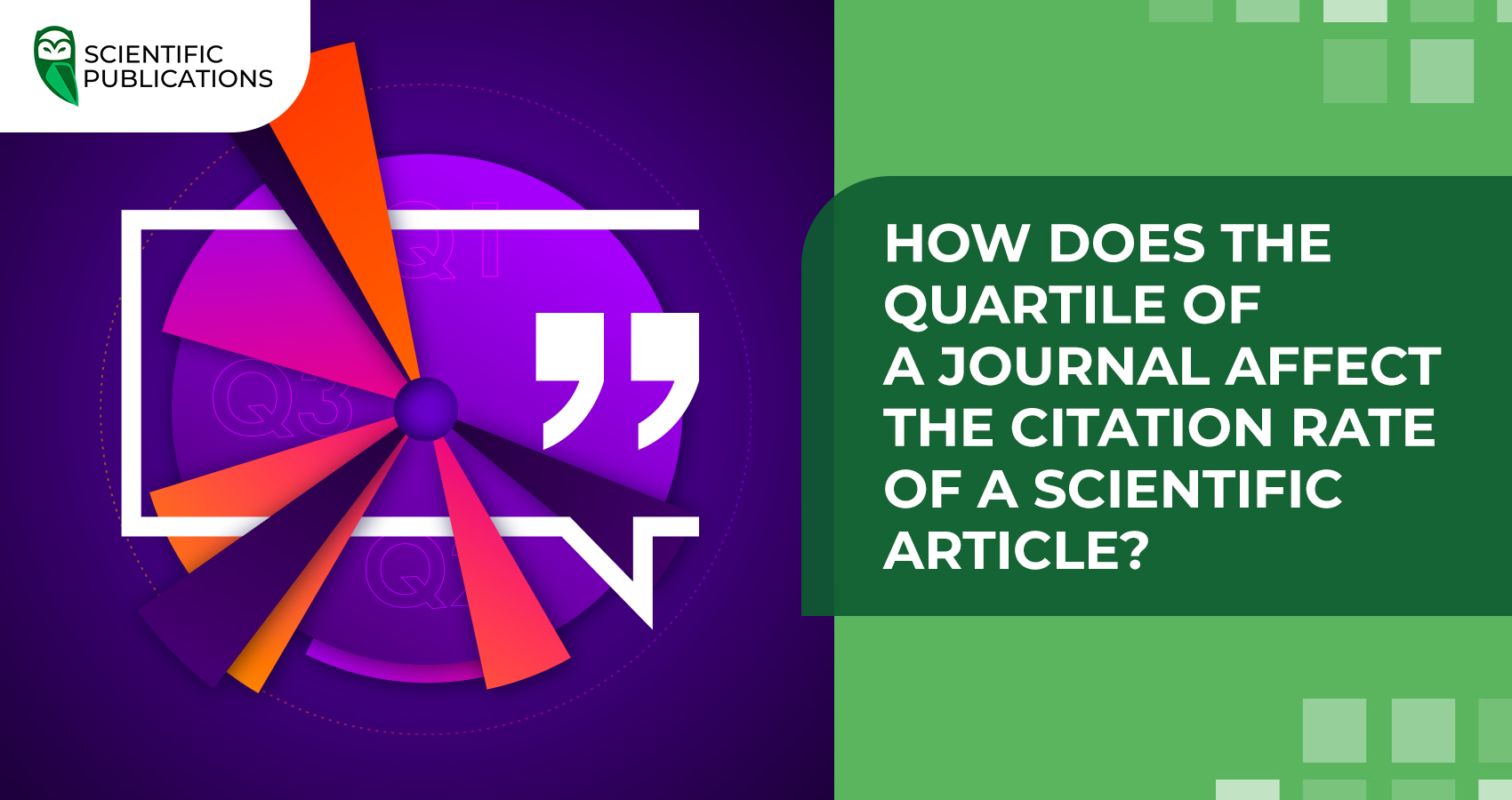
Journal quartiles and citations: what is the connection?
The main purpose of quartiles – is to rank scientific journals according to their citation rates. For example, the more often scientists cite articles from a particular journal, the higher its quartile. There are four quartiles in total: Q1, Q2, Q3 and Q4.
Accordingly, the most influential publications belong to the first and second quartiles, and those that are less popular in the scientific community - to the third and fourth. If you want to know the difference between each of them, read our article on this topic.
Next, we'll look at how each quartile affects article citations and what this means for authors in the context of their scientific careers.
The impact of Q1 and Q2 on citations
Journals with high Q1 and Q2 quartiles have a number of advantages that significantly increase the chance of high citations.
1. Broad audience and high visibility
Journals with high quartile often publish papers that appeal to a wider audience. These publications are favoured by scholars not only from a particular country, but from different parts of the world. Accordingly, publishing in such a journal ensures greater visibility of your work in the international arena.
The more international scholars are familiar with your research, the higher the chance that it will be cited, as the work will be accessible to a wider range of researchers interested in your topic.
2. High Quartile Journals
High quartile journals tend to have a high impact factor (when it comes to the Web of Science database) or SJR (when it comes to the Scopus database). This means that their articles on average receive more citations than publications in lower quartiles. Placing articles in Q1 and Q2 journals increases the likelihood that your article will be actively cited, as papers from these journals often receive more attention from the scientific community due to their high citation rates.
3. Prestige and credibility in the scientific community
Publishing in journals with high quartiles, such as Q1 and Q2, helps build an author's reputation in the scientific community. These publications usually have strict selection and peer-review criteria, which makes their articles more valuable from the perspective of the scientific community. Publishing in such journals is perceived as the result of meaningful and high-quality research, which contributes to more attention to your work and, as a result, more citations.
Impact of Q3 and Q4 on citations
While publications in lower quartile journals (Q3 and Q4) may not receive as much coverage as papers from high quartile journals, these journals also have their own characteristics that can positively affect citations.
1. Speed of publication and level of competition
One significant advantage of lower quartile journals is that they often have less competition and publication requirements may be less stringent than high quartile journals. This means that papers take less time to be peer-reviewed and published, which in turn is a very valuable characteristic for scientists who want to present their research results quickly.
Thus, rapid publication and less stiff competition in lower quartile journals can contribute to higher citation rates as papers become available to the scientific community faster and with less delay.
2. Narrow specialisation and target audience
Many Q3 and Q4 quartile journals focus on narrow, specialised areas of science. If your work is on a specific topic, publishing in such a journal can be very effective because it will appeal to a specific audience of researchers interested in your problem.
In such cases, the citation rate can be high within its scientific niche, despite the smaller number of readers of the journal as a whole.
The citation of a scientific article is an important indicator of its importance in the scientific field. The quartile of the journal in which a paper was published directly affects its visibility and the likelihood that it will be cited by other scientists. Understanding how quartile affects citation will help you make an informed choice when submitting an article for publication.
In case you need help in selecting a journal for publication, contact "Scientific Publications". We will select a publication with the quartile you need, which will match the topic of your article. In addition, our specialists will accompany you not only at all stages of publication, but also provide post-publication support. Fill out the form below and our manager will contact you as soon as possible. Together to new scientific achievements!